Disaster response is secondary only to disaster mitigation, at least until it is not.
Natural disasters create immediate demands for shelter, security, sanitation, logistics, medical care, and infrastructure restoration. Relief agencies often struggle to deliver these capabilities quickly because conventional construction requires skilled labor, extensive materials, and lengthy construction schedules.
Quik Blox technology addresses these challenges through a modular system of interlocking precast concrete blocks that support rapid assembly, structural resilience, and flexible deployment.
The system permits construction crews to create a wide range of emergency facilities from a common inventory of components. This capability increases operational flexibility while simultaneously reducing the logistical complexity. The result is a practical engineering platform that supports immediate response operations and longer-term recovery efforts.
Emergency Shelter and Temporary Housing for Disaster Response
Emergency shelter remains the most urgent requirement when disaster response literally makes the difference between life and death. Earthquakes, typhoons, floods, wildfires, and armed conflicts often displace large populations within hours.
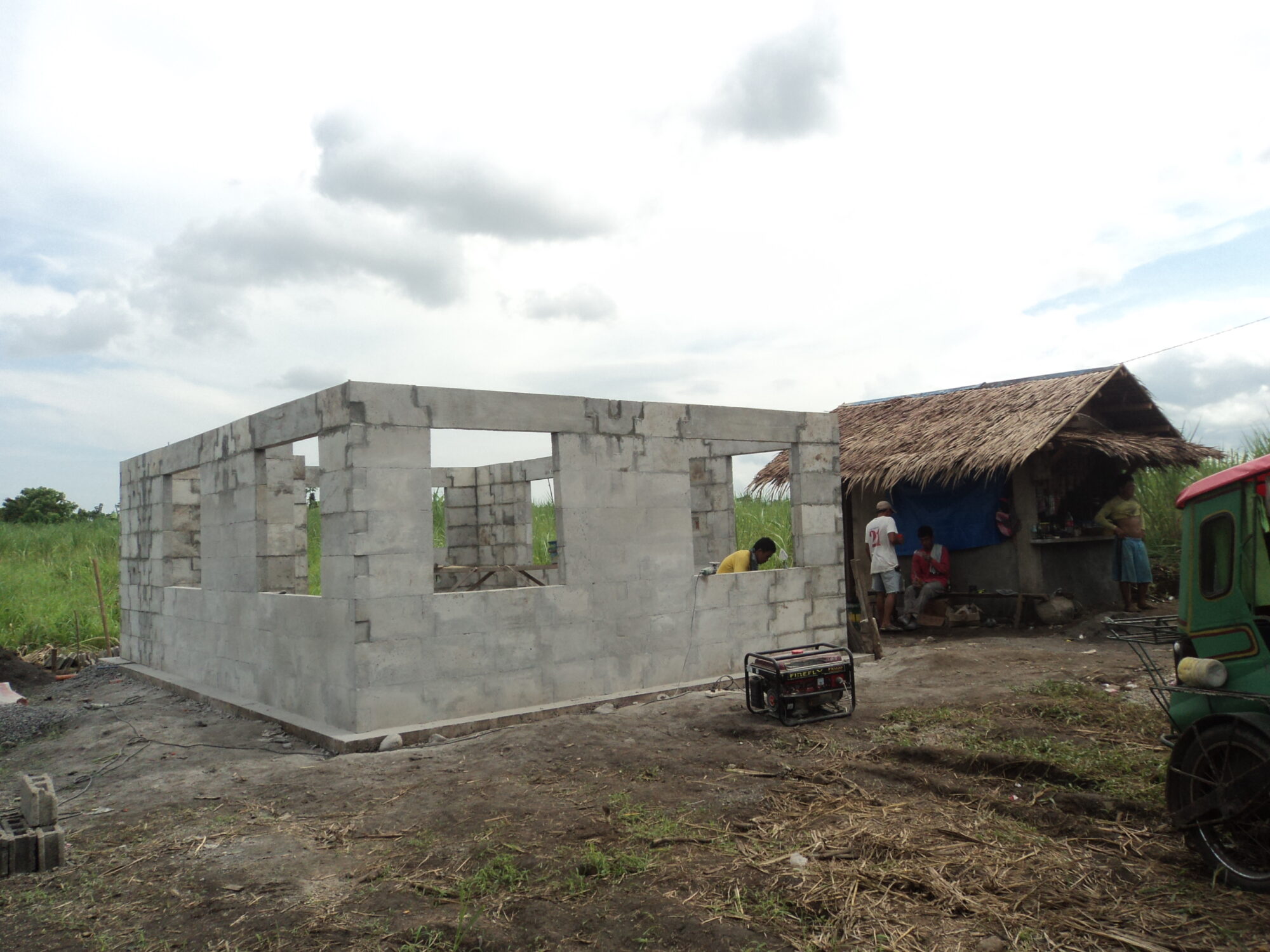
Quik Blox structures can provide near-immediate accommodations for affected families while recovery efforts begin with structures large enough for such groups easily being constructed in less than one day.
The modular nature of the system supports the immediate construction of individual family dwellings, communal shelters, worker housing, and temporary residential compounds. Relief organizations can expand these facilities incrementally as demand increases. The system also supports adaptation to local conditions through different wall configurations and structural layouts including the capacity to mitigate further destruction or loss from the continuation of disasters in the affected area.
Unlike tents, concrete structures provide improved insulation and protection from wind, rainfall, debris impact, and unauthorized entry. These characteristics improve safety and living conditions during prolonged displacement periods. Communities can also transition many temporary structures into permanent facilities rather than abandoning them after emergency operations conclude or re-utilize them for other purposes.
The ability to assemble shelters with basic labor skills further strengthens the disaster response capacity of the Quik Blox engineering solutions. Relief organizations can train local residents quickly and expand the construction efforts without relying on specialized trades, without requiring additional time for curing, and without any lengthy training being required.
Medical and Public Health Facilities
Medical operations require secure and durable facilities immediately after a disaster. Hospitals often suffer damage during major events, while demand for healthcare rises sharply.
Quik Blox structures can support field clinics, triage centers, vaccination sites, pharmaceutical storage facilities, and temporary treatment wards. Emergency managers can establish these facilities near affected populations while permanent healthcare infrastructure undergoes repair.
Public health operations also require sanitation infrastructure. The sealed Quik Blox systems can support troughs and other large-scale water sources including hand-washing stations, shower facilities, latrine structures including septic systems, waste collection areas, and water distribution points. These facilities reduce disease transmission and improve the overall community health conditions.
During outbreaks of communicable disease, emergency planners can also establish isolation facilities and controlled treatment areas. The durability of concrete construction supports cleaning and disinfection procedures more effectively than temporary fabric structures.
These applications strengthen healthcare capacity during both immediate response and long-term recovery operations.
Water Supply and Sanitation Infrastructure
Water access determines the success of nearly every disaster response operation. Damaged infrastructure often disrupts drinking water supplies for extended periods and often compromises wastewater management systems.
Quik Blox assemblies can create wells, water troughs, distribution stations, storage reservoirs, pump enclosures, septic tanks, and other protective structures necessary for treatment equipment. Relief organizations can position these facilities close to displaced populations and reduce travel distances for water collection while also maintaining essential sanitation services.
Sanitation infrastructure is imperative during disaster response scenarios. Emergency responders can construct restroom facilities, septic systems, drainage channels, and waste management stations. These installations help contain wastewater, prevent the contamination of fresh and potable water resources, and greatly reduce public health risks.
Flood events often produce standing water, damaged drainage networks, and failures of existing wastewater infrastructure.
The modular block system supports not only the construction of facilities capable of preventing the incursion of floodwaters, but also the construction of temporary channels, diversion structures, erosion control measures, and replacement sanitation facilities that restore basic site functionality.
Together, these capabilities address two of the most critical determinants of survival and recovery by providing reliable access to clean water and the effective management of wastewater.
Emergency Operations and Logistics Facilities
Disaster response depends upon the effective coordination and logistics of relief efforts. Relief supplies, equipment, personnel, and communications systems require secured facilities.
Quik Blox structures can serve as easily secured and defensible emergency operations centers, incident command facilities, communications hubs, equipment depots, supply warehouses, maintenance workshops, and vehicle support areas. These facilities provide operational continuity during complex disaster response missions.
The modular nature of the system allows for any required and rapid expansion as operational demands evolve. Organizations can begin with a small command post and quickly and easily enlarge and even secure the facility as additional responders arrive.
Storage facilities also protect critical supplies from weather exposure and theft. Medical inventories, food supplies, communications equipment, and fuel resources must remain both accessible and secure throughout operations.
This flexibility improves efficiency while reducing dependence on scarce permanent infrastructure.
Security and Public Safety Applications in Disaster Response
Emergency conditions often require temporary security infrastructure during ongoing disaster response efforts. Population displacement, supply distribution, and damaged transportation networks create significant public safety challenges.
Quik Blox systems can support police checkpoints, military checkpoints, guard posts, observation positions, perimeter barriers, vehicle control points, and protected aid distribution facilities. These structures help to maintain order and protect both responders and civilians.
Concrete construction provides substantially greater resistance to impact and ballistic threats than lightweight temporary facilities. This characteristic improves personnel safety during high-risk operations.
Security applications also include the protection of critical infrastructure. Emergency managers can establish protective barriers around fuel supplies, generators, communications equipment, and water treatment systems.These capabilities strengthen the overall resilience during both disaster response emergencies and security-sensitive operations.
Transportation and Access Restoration
Transportation networks support every aspect of disaster response. Damaged roads and unstable terrain frequently delay relief operations.
Quik Blox assemblies can create traffic control barriers, temporary retaining walls, roadway stabilization structures, culvert components, drainage improvements, and vehicle exclusion barriers. These installations support the rapid restoration of access routes imperative for success during already complex disaster response scenarios.
Retaining structures hold a particular value in mountainous terrain and flood-affected areas. Emergency crews can stabilize slopes, protect roadways, and reduce erosion while permanent repairs proceed.
Traffic management structures also improve responder safety and control movement through hazardous areas. Effective route management reduces congestion and accelerates delivery of critical supplies.
These applications increase operational mobility during the most demanding phases of disaster response.
Flood Mitigation and Hazard Control for Disaster Response Efforts
Flooding frequently causes more damage than the initial disaster event. Emergency managers therefore require rapid methods for controlling the continued movement of water, mud, and even debris, and for protecting critical assets.
Quik Blox technology supports temporary floodwalls, levee reinforcement systems, riverbank stabilization structures, diversion channels, pump protection barriers, and erosion control measures. These installations can reduce the potential for secondary damage and preserve critical infrastructure.
The Quik Blox interlocking block systems also support earth retention and slope stabilization. Emergency crews can address localized failures before they expand into larger hazards.
These capabilities extend beyond disaster response activities and contribute directly to the ongoing disaster recovery efforts. Communities can also obtain and maintain stockpiles for future emergencies and deploy them when needed.
The ability to reuse the components after deployment further increases the long-term value and benefits.
Food Distribution and Community Recovery
Disaster response operations require more than survival infrastructure. Communities must restore normal social and economic functions.
Quik Blox facilities can support community kitchens, secured food storage centers, distribution hubs, temporary schools, administrative offices, community meeting spaces, and local marketplaces. These facilities strengthen the social stability which is imperative during disaster recovery efforts.
Food preparation and distribution centers improve the coordination of relief supplies. Educational and administrative facilities support the continuity of essential services and the restoration of local resilience.
Many disaster response programs struggle because temporary infrastructure cannot transition into permanent use. Quik Blox structures can often remain in service after emergency operations conclude. This characteristic improves the return on investment and accelerates community recovery.
The system therefore supports both immediate humanitarian objectives and long-term development goals.
A Review of Disaster Response Options
Quik Blox technology offers far greater utility than emergency shelter construction alone. The system functions as a versatile engineering platform that supports housing, healthcare, sanitation, logistics, transportation, flood control, security, and community recovery.
A single inventory of modular components can satisfy numerous operational requirements that traditionally require multiple construction systems.
This flexibility carries significant strategic value for disaster management organizations. Reduced material diversity simplifies procurement, transportation, storage, and deployment. Rapid assembly accelerates response timelines and expands operational capacity. Durable construction improves local resilience and extends the service life beyond the emergency period.
The Quik Blox system converts a standardized collection of structural components into a broad portfolio of emergency infrastructure solutions. That capability aligns closely with the fundamental objective of disaster response: delivering the greatest operational effectiveness with the fewest resources and within the shortest possible time-frame.