Disaster mitigation in construction depends upon the scientific management of forces rather than the comparatively simple accumulation of material mass.
Structural failure occurs when environmental forces exceed the capacity of a structure to distribute, redirect, absorb, or dissipate the impacting energy.
Engineers therefore focus primarily upon the interaction of material properties, structural geometry, load path continuity, redundancy, and force distribution. Quik Blox Engineering Solutions applies these principles through mathematically engineered configurations that transform concrete and steel into integrated systems specific to hazard and disaster mitigation.
Quik Blox Engineering Solutions applies these principles through mathematically engineered configurations that transform concrete and steel into integrated systems designed specifically for hazard mitigation in addition to aesthetic appeal. The system utilizes a unique combination of geometry, structural continuity, force distribution, redundancy, and strategic reinforcement to manage the loads generated by both natural and man-made disasters.
Material Science and Structural Performance
Construction materials respond differently to compressive, tensile, shear, and flexural forces. This understanding is necessary to create structures successfully designed for disaster mitigation in terms of specific events.
Concrete exhibits exceptional compressive strength and performs efficiently under loads that force material particles together.
Steel exhibits high tensile strength and resists forces that pull structural elements apart.
Engineers combine these complementary properties to create structures capable of resisting diverse loading conditions. The efficacy of this combination depends upon the ability of the structure to transfer loads more efficiently between materials and across connection points where stress can initiate the processes resulting in structural failure.
Quik Blox configurations integrate concrete and steel within mathematically precise, engineered structural systems. The resulting assemblies utilize compressive resistance from concrete and tensile resistance from reinforcement more evenly spread across interlocking tabulated block systems. This interaction increases the structural capacity while also improving the resistance to failure mechanisms associated with earthquakes, floods, impacts, and extreme wind events.
The disaster mitigation performance of the system is determined by the scientific and mathematical precision of the structural mechanics rather than material quantity alone. Engineers achieve greater resilience by controlling force pathways and stress distribution throughout the structure without the linear and constant vulnerabilities of the traditional mortar-based connections.
The Mathematical Importance of Geometry
Geometry determines how forces move through a structure. Every structural form influences the magnitude, direction, and concentration of applied loads and pressure.
Engineers utilize an advanced mathematical analysis to predict force movement within structural systems and the best approach for DRR or Disaster Risk Reduction. They evaluate stress fields, force vectors, load paths, and energy transfer characteristics. These calculations allow designers to develop configurations that improve resilience under specific hazard conditions to enhance the efficiency of structures designed for disaster mitigation.
Quik Blox utilizes interlocking geometries that distribute these forces throughout multiple structural elements for disaster mitigation, though specific to the types of disaster or disasters common to an area. They may be related in terms of resistance against wind, water, or mud, but may also be unique and specific for disasters such as earthquakes or even battlefield conditions. No matter the potential disaster, the design is specifically focused on reducing localized stress concentrations and promoting more uniform force distribution.
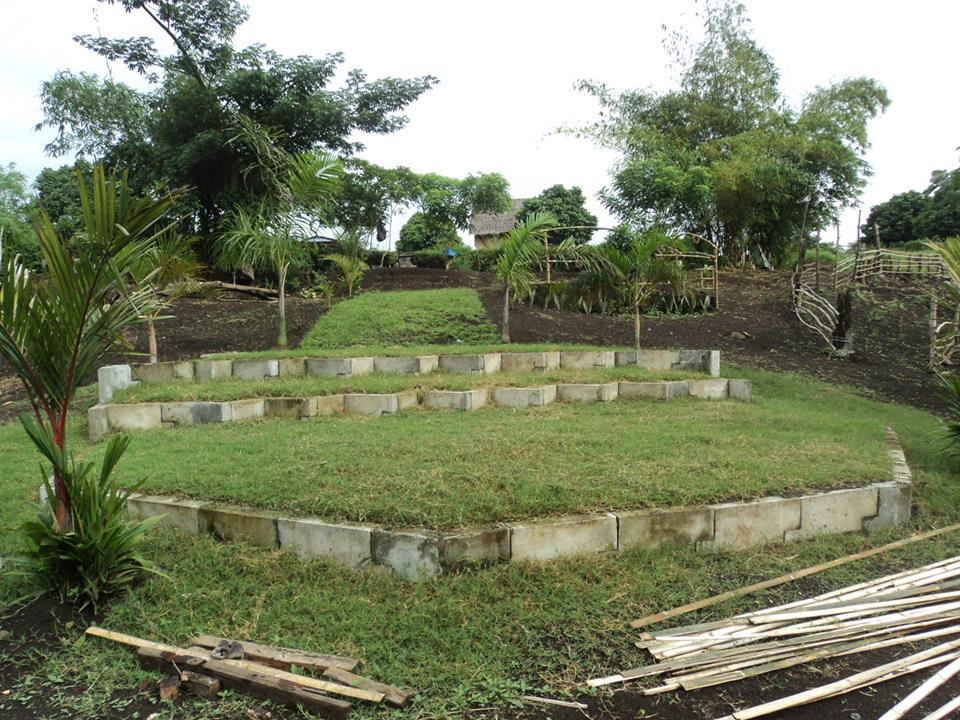
Precisely angled configurations, stepped arrangements, retaining structures, wave attenuation systems, and reinforced wall assemblies each perform differently because the assigned geometry alters the force behavior. Structural performance therefore depends upon the precise mathematical design.
Load Path Continuity and Force Distribution in Disaster Mitigation
Every load applied to a structure follows the most direct path of least resistance toward the foundation. Structural failure frequently occurs when load paths become interrupted or concentrated within limited areas.
Continuous load paths improve the structural stability by providing predictable routes for force transfer. Engineers therefore seek designs that maintain the structural continuity throughout the entire assembly.
Quik Blox interlocking geometries create integrated structural networks that transfer forces more efficiently between individual construction components. These connections reduce the likelihood of isolated failure points and improve the overall system stability.
Strategic steel reinforcement further enhances load path continuity. Reinforcement connects structural elements and allows tensile forces to move throughout the structure without concentrating at vulnerable locations.
The result is a structural system that distributes forces more effectively than systems dependent upon numerous independent, even constant linear connections.
Elimination of Mortar Joint Weaknesses
Traditional masonry systems contain continuous mortar joints between structural units. These joints often represent natural locations for crack initiation and propagation.
Earthquake loading, differential settlement, impact forces, and cyclic loading frequently exploit these discontinuities. Structural damage often follows mortar joint pathways because they commonly possess a lower strength than the surrounding masonry units.
Quik Blox eliminates these continuous mortar interfaces through the use of interlocking structural geometry. The system therefore reduces the number of inherent discontinuities within the wall assembly and provides a substantially more durable, and to the degree necessary, flexible planar surface.
This characteristic improves the structural continuity and reduces the stress concentrations that may contribute to a complete failure resulting in an immediate improvement in the structural capacity to withstand external forces and immediately increase the potential for disaster mitigation.
The resulting performance is achieved from the precise geometric integration and continual structural reinforcement without relying on connective points or mortar lines in the construction process creating structural stress points that will more likely fail under the stress of disasters, natural or otherwise.
The absence of mortar joints therefore represents a significant engineering advantage in construction for the sake of disaster mitigation, and which increases overall structural stability and durability.
Energy Dissipation and Dynamic Loading in Disaster Mitigation
Natural disasters frequently generate dynamic loads rather than static loads, thus the need for specialized disaster mitigation principles to be introduced in modern construction. Earthquakes, storm surges, impacts, debris strikes, and high winds impose rapidly changing forces upon structures.
Engineers must therefore consider energy transfer in addition to force resistance for increased structural durability to ensure disaster mitigation is viable. Structures that manage energy transfer and dissipation more effectively will outperform structures that rely solely upon mass and strength.
Quik Blox configurations can incorporate geometries that dissipate energy through force redistribution and controlled load transfer. Structural assemblies can spread forces across larger areas and reduce localized demand on individual components.
This principle allows structures to accommodate extreme loading conditions while reducing the probability of catastrophic failure.
Effective disaster mitigation therefore depends upon the geometric and scientific principles of energy management as much as they do on material strength.
Hydrodynamic and Aerodynamic Force Management
Floods, tsunamis, storm surge events, and extreme winds create fluid-driven forces that can damage conventional structures. These forces depend upon velocity, momentum, pressure differentials, and flow characteristics. Engineers utilize fluid dynamics to develop structures that alter the behavior of moving water and air. Strategic geometries can redirect flow, reduce pressure concentrations, and attenuate destructive energy.
Quik Blox systems can form barriers, revetments, retaining structures, and protective assemblies that manage hydrodynamic forces through geometric designs that may also be incorporated as decorative structural enhancements due to their aesthetic appeal.
The efficacy of these systems is established by the precision mathematical relationships governing fluid behavior. The aesthetic appeal is just part of the principle of where strength and quality connect.
Redundancy and Alternate Load Paths
Redundancy improves resilience and disaster mitigation by providing multiple routes for force transfers to occur without unduly compressing any individual stress point. When one structural element experiences damage, alternate pathways allow the structure to continue functioning.
Engineers frequently incorporate redundancy into critical infrastructure because it reduces the overall vulnerability to localized failures. While such measures are effective in the short-term, over the course of time these localized failures will gradually expand, ultimately resulting in a larger and more complete structural failure – especially in times of stresses such as those imposed by natural and man-made disasters.
Quik Blox configurations support the inclusion of redundant load paths through interconnected structural and tabulated arrangements. Forces can be redistributed throughout the system reducing the likelihood of individual elements experiencing excess stress or structural weakening or damage.
This capability enhances structural reliability during extreme events and improves protection of occupants and property.
Redundancy therefore represents one of the most important principles of disaster-resistant engineering.
Disaster Mitigation in Review
Disaster mitigation depends upon the scientific control of force, energy, and structural behavior. Effective systems utilize material science, geometry, structural mechanics, fluid dynamics, and mathematical analysis to reduce vulnerability to natural and man-made hazards.
Quik Blox Engineering Solutions applies these principles through interlocking geometries, continuous load paths, strategic reinforcement, redundancy, and engineered force distribution.
The performance of the system is a direct result of the precise structural design and mathematical configuration rather than relying on layered horizontal and vertical stress points for structural component connections.
This distinction remains critical because resilience and their capacity to serve as disaster mitigation emerges from the management of forces throughout the entirety of the structure.
Perhaps the greatest strength of the Quik Blox approach lies in its ability to transform proven, albeit fundamental engineering principles into adaptable configurations specifically designed to mitigate disaster-related damage across diverse environmental conditions while remaining aesthetically appealing.