
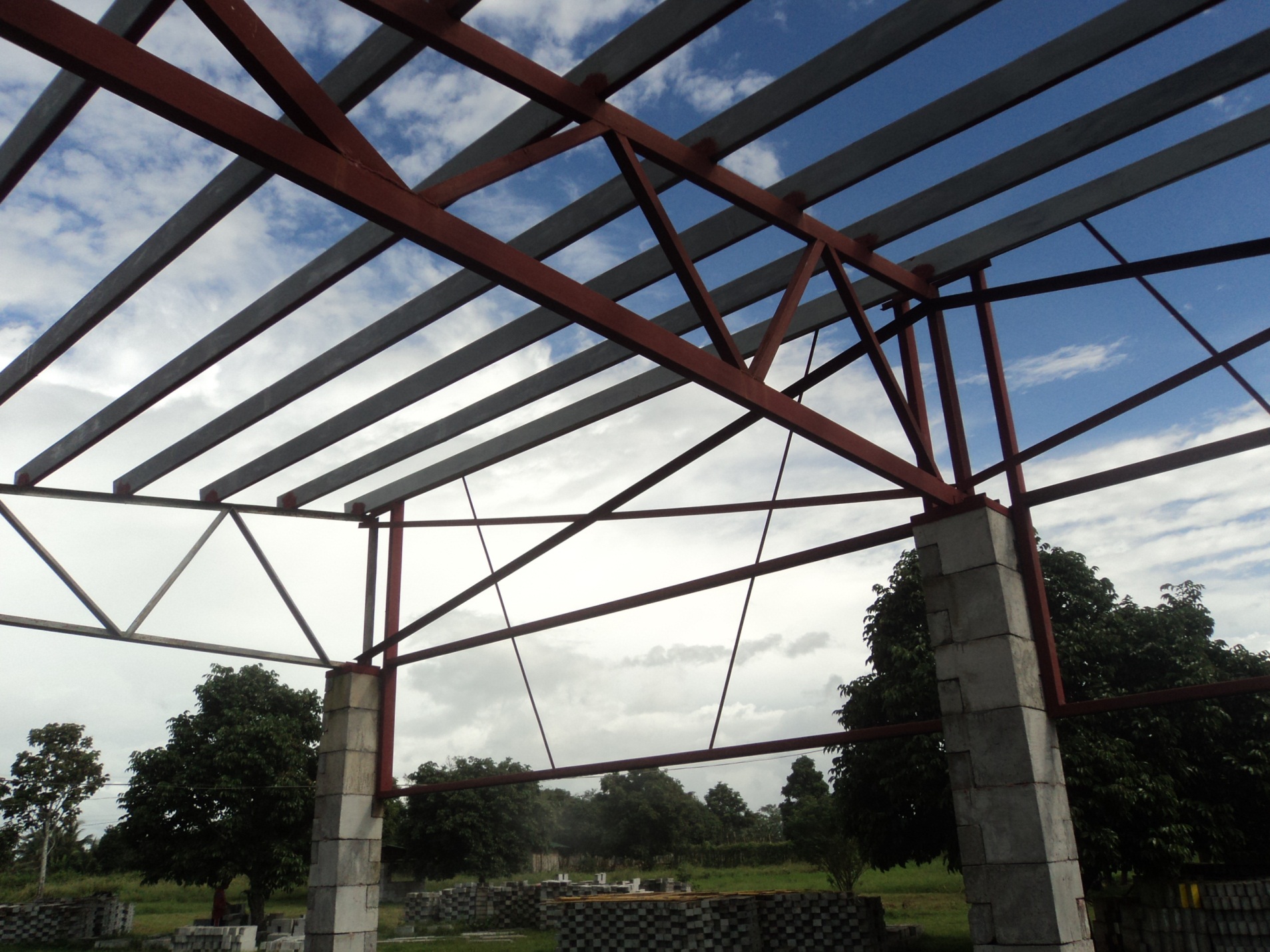
Industrial construction demands structural reliability, rapid project execution, operational durability, and the capacity to withstand harsh and demanding environmental conditions.
Industrial facilities frequently operate under continuous loading, equipment vibration, impact exposure, thermal fluctuations, and aggressive environmental conditions. These requirements place significant demands upon industrial construction materials and structural systems.
Quik Blox Engineering Solutions addresses these challenges through the integration of material science, structural engineering, geometric design, and modular construction principles. The resulting system provides industrial construction developers with an operational methodology that combines structural performance, construction efficiency, operational resilience, and long-term adaptability.
Industrial Construction Requirements
Industrial facilities require structures capable of supporting substantial static and dynamic loads. Manufacturing plants, processing facilities, warehouses, distribution centers, mining operations, utility installations, and agricultural facilities all depend upon structural systems that maintain stability under stressful and constantly demanding operational conditions.
Quik Blox utilizes high-strength concrete components and design principles focusing on engineered interlocking geometries that efficiently transfer the loads throughout a larger portion of the structural system. This approach distributes the forces across multiple paths and reduces the localized stress concentrations that can contribute to structural deterioration in traditional industrial construction.
The elimination of conventional mortar joints also provides an important advantage in industrial applications.
Stress Points and Industrial Hazards
Traditional masonry systems often develop weaknesses along mortar interfaces because these locations experience differential movement, environmental degradation, and intermittent loading cycles exacerbated by stressful events, heat and cold cycles, and even the occasional vehicle impacting the side of the buildings.
Quik Blox removes these continuous mortar joints and replaces them with precision-engineered interlocking connections. This configuration reduces natural stress concentrations and improves structural continuity throughout the completed structure.
This is done by providing a sufficient level of compressive strength to withstand impact, a sufficient amount of flex to prevent stress point breakage, and further enhanced by isolated rather than continual stress points in the construction process
Strategic steel reinforcement further enhances the industrial performance. This internal reinforcement creates continuous structural connections that improve tensile capacity, load distribution, and resistance to dynamic forces.
The combination of interlocking geometry and engineered reinforcement produces structural assemblies capable of accommodating the demanding operational environments of industrial construction while simultaneously maintaining long-term stability.
Reduced Downtime in Industrial Operations
Industrial Construction speed represents another significant advantage for industrial development.
Project schedules directly influence operational readiness, revenue generation, workforce deployment, and capital utilization. Traditional masonry construction requires mortar preparation, placement, curing, and quality control activities that extend construction timelines. These challenges are further exacerbated by the requirements for skilled labor that increases the cost of industrial construction.
Quik Blox eliminates these requirements through dry-stack assembly. Construction crews can install structural components rapidly without waiting for mortar curing cycles. This approach accelerates project completion and reduces schedule-related risks.
Documented installation rates demonstrate the efficiency of the system. Crews can construct substantial wall areas within compressed time-frames while utilizing fewer labor resources than conventional masonry systems. Manufacturing output can match installation rates, creating a continuous workflow that minimizes delays associated with material availability and site logistics.
Challenges of Industrial Job Sites
Industrial construction frequently occurs in remote or challenging environments. Mining operations, energy infrastructure projects, agricultural developments, coastal facilities, and disaster recovery projects often face labor shortages, transportation constraints, and limited access to specialized construction resources.
The modular nature of Quik Blox simplifies logistics by reducing material complexity and minimizing labor and material requirements on the job site. Project teams can transport, stage, and install components more efficiently while also maintaining high levels of productivity.
Industrial Strength Durability
Durability remains a primary concern for industrial construction and infrastructure because facilities must withstand years of operational demands. Equipment vibration, vehicle impacts, thermal cycling, moisture exposure, chemical exposure, and environmental weathering can all degrade conventional construction materials over time.
Quik Blox utilizes durable concrete and specialized aggregate components and structurally integrated configurations that resist many of the common deterioration mechanisms associated with traditional masonry systems.
Industrial facilities also require the flexibility to accommodate changing operational requirements. Production processes evolve, equipment changes, storage demands fluctuate, and facility expansions often become necessary.
The modular characteristics of Quik Blox support phased construction, facility modification, and future expansion. This adaptability allows industrial operators to respond to changing business requirements without extensive structural reconstruction.
Industrial Strength Engineering
The engineering principles of force distribution, redundancy, and load path continuity further improve industrial construction and structural resilience. Multiple load paths allow structures to maintain stability even when localized damage occurs.
This characteristic reduces vulnerability to impacts, equipment accidents, extreme weather events, and other operational hazards. The resulting resilience supports business continuity and enhances protection of critical assets.
Industrial Disasters
Environmental resilience represents another important benefit. Industrial facilities frequently operate within regions exposed to floods, hurricanes, earthquakes, landslides, severe storms, and other hazards.
Quik Blox configurations can incorporate site-specific engineering solutions that address virtually any identified environmental risks. Strategic geometric arrangements can redirect forces, dissipate energy, and improve the overall structural performance during extreme events.
Industrial Decor
The visual characteristics of the industrial construction also influence public perception, workforce satisfaction, and corporate image. The geometric versatility of Quik Blox allows designers to create facilities that achieve both functional and architectural objectives.
Industrial construction no longer require a choice between aesthetic appearance and proven performance. The Quik Blox system supports more efficient industrial construction while also enabling visually distinctive architectural solutions.
The benefits of the Quik Blox Engineering Solutions in industrial construction extend far beyond construction methodology alone. The system combines structural strength, rapid installation, operational durability, logistical efficiency, and environmental resilience within a unified engineering framework.
These characteristics collectively address many of the most significant challenges facing modern industrial construction and infrastructure development. Perhaps the greatest value of the system lies in its ability to integrate scientific design principles with practical industrial construction requirements, creating industrial infrastructure that achieves high levels of performance, adaptability, and long-term reliability even under demanding operating conditions.